How 5 Music Artists Grew Their YouTube Channels With Targeted Google Ads Promotion
Posted on July 22, 2026 by Jason Caldwell
Most music artists who try paid YouTube promotion for the first time walk away disappointed. They spend money, watch a number go up briefly, and then see it flatline — no subscribers, no engagement, no lasting momentum. The view count was never the problem. The audience was.
When a promoted video reaches viewers who have no genuine interest in the music being promoted, the engagement signals those viewers generate are weak or absent. No saves. No likes. No subscribers. No comments. The algorithm reads this as content that failed to satisfy its audience, which suppresses organic distribution even after the paid campaign ends.
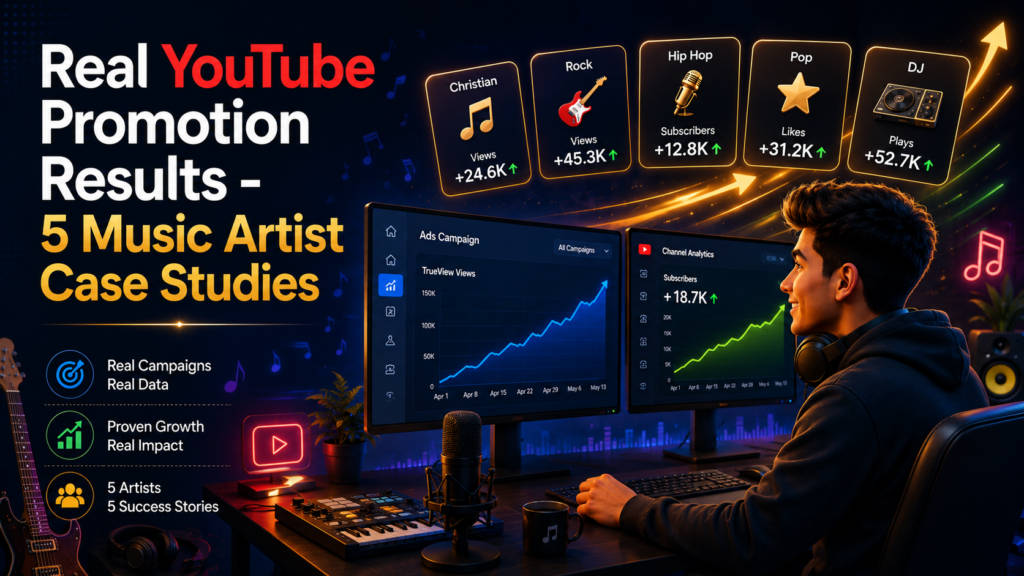
The five campaigns documented in this case study took a different approach. Each one was built around audience targeting first — matching the promoted content to viewers with demonstrated interest in the specific music genre being promoted. The results reflect what happens when the right music reaches the right people: engagement that compounds, subscriber growth that sticks, and channel momentum that continues after the campaign ends.
These are real campaign outcomes from real artist accounts, verified through Google Ads campaign data and YouTube channel analytics.
** Out of respect for our clients’ privacy and in accordance with Google Ads data guidelines, we are unable to share YouTube channel links, account details, or campaign credentials in this case study.
Case Study 1: Christian Music Artist — From 427 Views to 16,350 Views
The Starting Point
This campaign began with a Christian music artist whose channel was early in its growth phase. The video entered the campaign with 427 views and a subscriber base of 12,400. While the channel had an established audience, the specific video being promoted had not broken out — it needed exposure to the right audience to gain traction.
The Campaign Approach
The campaign ran as a responsive video ad targeting viewers with demonstrated interest in Christian music and worship content. The targeting was configured to reach audiences whose YouTube watch history placed them firmly within the Christian music category — not general music audiences, but viewers specifically consuming the type of content the artist produces.
The Google Ads campaign data shows 13,004 impressions delivered, generating 4,796 TrueView views with 612,254 minutes of total watch time and 25 clicks through to the channel. The watch time figure is particularly significant — it represents genuine, sustained viewing from an audience that chose to keep watching rather than skip.
The Results
The campaign delivered over 10,000 additional views, moving the video from 427 to 16,350 views. More meaningfully, the channel subscriber count grew from 12,400 to 21,000 — an increase of 8,600 subscribers attributable to the campaign period. Likes on the video moved from 7 to 35.
The subscriber growth relative to the view count delivered tells the important story here. A subscriber conversion rate at this level reflects an audience that was genuinely interested in what the channel offers — not casual viewers who clicked and left, but listeners who responded to the music and chose to follow the artist for more. That is the outcome of matching a Christian music video to a Christian music audience rather than targeting broadly and hoping the right viewers find it.
Case Study 2: Rock Musician — 5,500 Views With Sustained Engagement
The Starting Point
This campaign promoted a rock music video that was already performing reasonably well organically. The video entered the campaign with 105,762 views and the channel had 5,320 subscribers. The goal was to extend reach within the rock music community and generate the kind of engagement signals that feed algorithmic recommendations.
The Campaign Approach
The campaign ran as an in-feed video ad — a format that places the promoted video in YouTube search results, the homepage feed, and the suggested videos sidebar. In-feed placement is particularly effective for music content because viewers who click an in-feed ad have made an active choice to watch, which produces stronger initial engagement signals than pre-roll formats where the viewer’s attention is directed elsewhere.
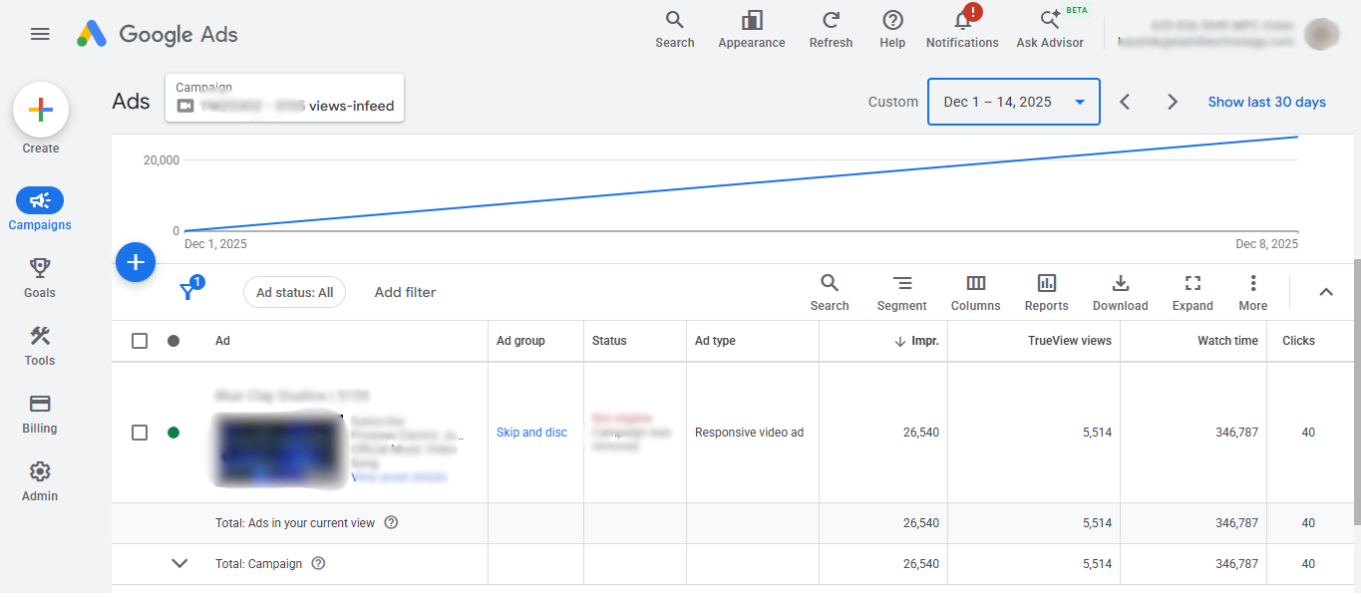
The targeting was built around rock music interest segments and music genre affinity audiences. Google Ads campaign data shows 26,540 impressions delivered across the Dec 1–14, 2025 campaign window, generating 5,514 TrueView views, 346,787 minutes of watch time, and 40 clicks.
The Results
The campaign added over 5,500 views, moving the video from 105,762 to 112,857 total views. Subscriber count grew from 5,320 to 5,360. Likes increased from 873 to 911.
The engagement metrics here reflect something worth understanding about promotion for established channels with existing content. The view count increase is proportionally smaller because the channel already had significant organic reach — the campaign extended that reach into new pockets of the rock music audience rather than driving the dramatic early growth possible for newer channels. The watch time generated — 346,787 minutes — demonstrates that the viewers reached were genuinely engaged with the content, which contributes to the kind of sustained algorithmic recommendations that keep an established channel’s content circulating.
Case Study 3: Hip Hop Artist — 756 Subscribers to 1,200 Subscribers
The Starting Point
This was one of the most compelling growth trajectories in this collection. The hip-hop artist’s channel entered the campaign with 107,924 views on the promoted video and 756 subscribers — a view count that did not reflect the channel’s subscriber base, suggesting significant passive discovery without the follow-through that converts viewers to subscribers.
The Campaign Approach
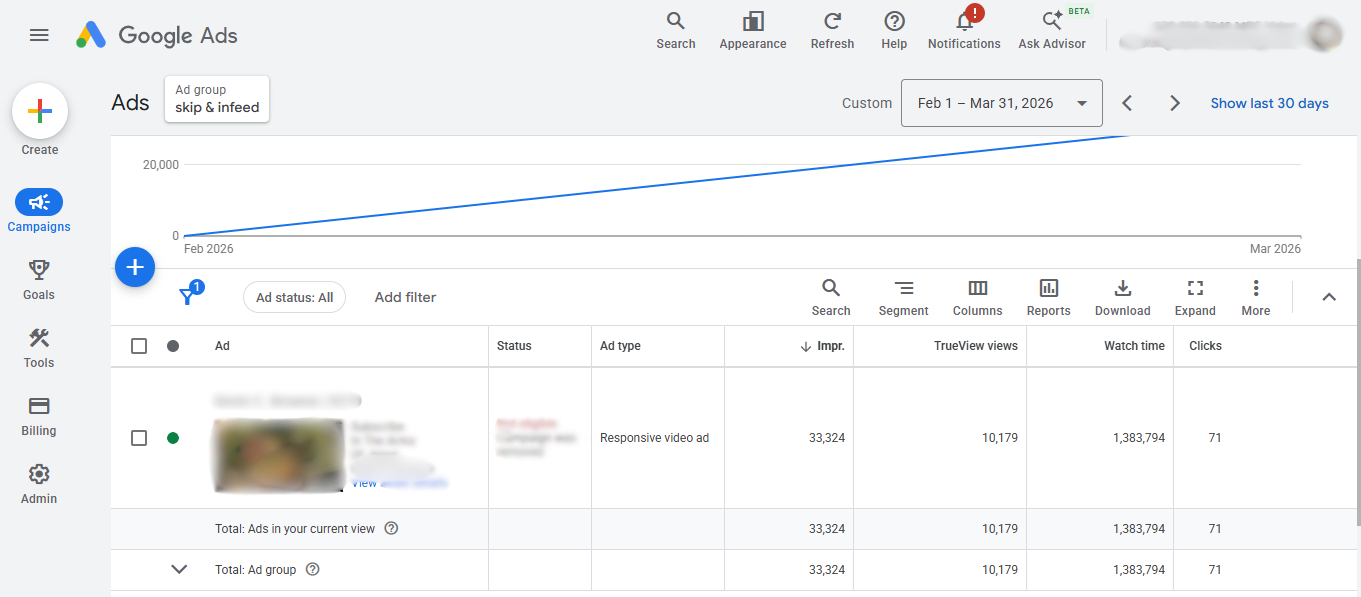
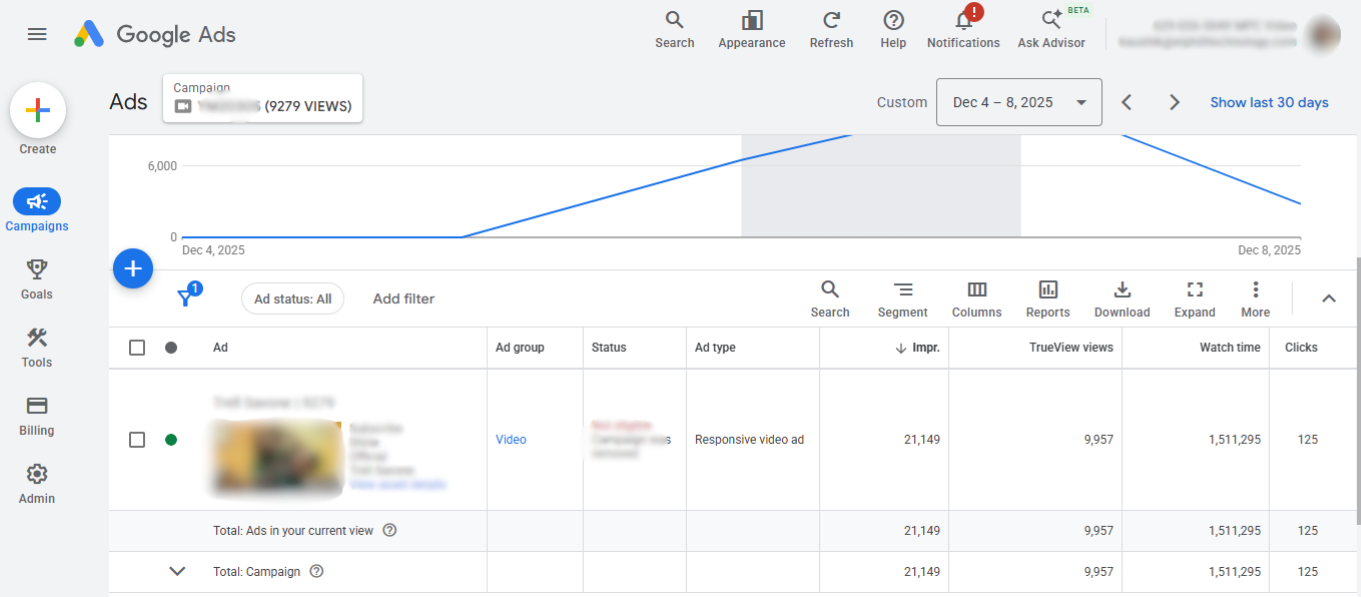
The campaign ran across February and March 2026 using both skip and in-feed ad formats simultaneously. Running both formats is a deliberate strategic choice — skippable in-stream ads reach viewers during the pre-roll window when they are engaged with another video in a related category, while in-feed ads reach viewers who are actively browsing and searching within the hip-hop content space. The two formats together cover different intent states within the same target audience.
The targeting was configured around hip-hop and urban music interest segments. Google Ads campaign data confirms 33,324 impressions delivered, generating 10,179 TrueView views, 1,383,794 minutes of watch time, and 71 clicks across the February to March 2026 period.
The Results
The campaign delivered over 9,900 additional views, moving the video from 107,924 to 218,288 total views. The channel’s subscriber count grew from 756 to 1,200 — an increase of 444 subscribers, representing a nearly 59 percent growth in the channel’s following. Likes grew from 4,100 to 7,500.
The like count growth is the standout metric here. Moving from 4,100 to 7,500 likes — an increase of 3,400 — on a single video reflects an audience that was not just watching but actively responding to the content. Hip-hop audiences are known for strong engagement when the music connects, and the targeting precision that put this content in front of genuine hip-hop listeners produced exactly the kind of active response that builds algorithmic momentum. With 1,383,794 minutes of total watch time, the campaign also generated significant YPP watch hour accumulation during the campaign window.
Case Study 4: Pop Music Artist — Building From Near Zero
The Starting Point
This campaign represents one of the most challenging scenarios in our YouTube promotion: starting from almost nothing. The pop music artist began the campaign with just 10 views on the promoted video, 1 subscriber, and 0 likes. No algorithmic history, no audience data, no existing momentum for YouTube’s recommendation system to build on.
The Campaign Approach
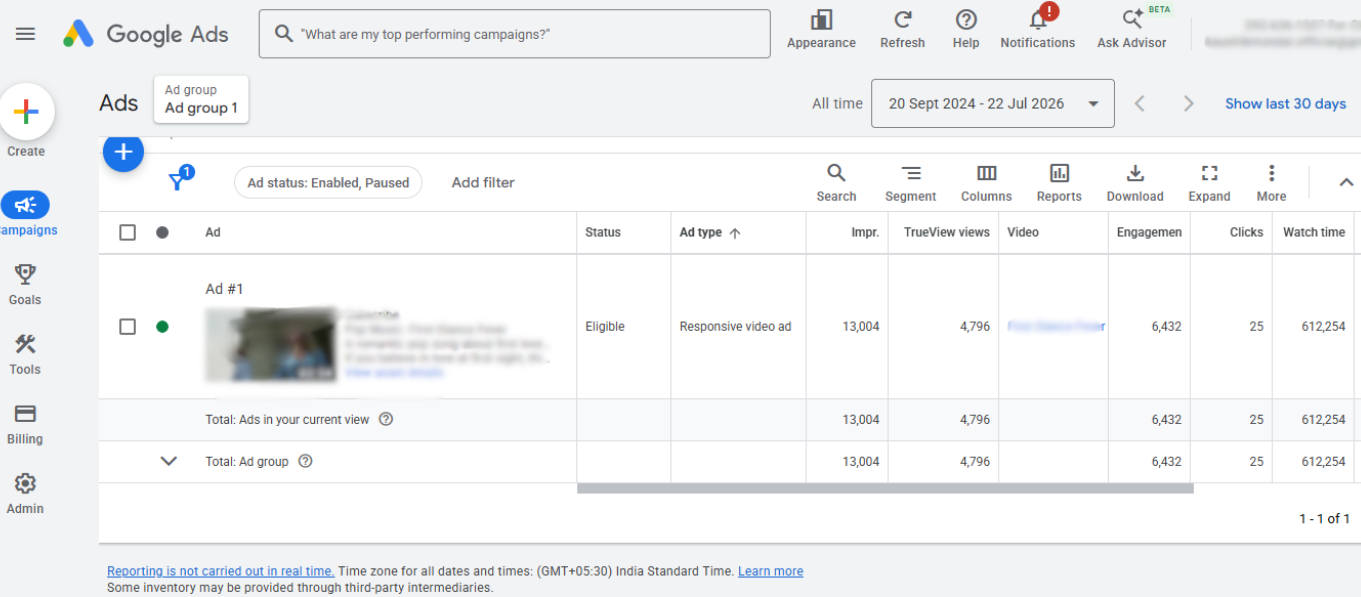
The campaign ran in December 2025 across a five-day window — December 4 to 8 — using a responsive video ad format. The condensed campaign window was a deliberate choice for early-stage channels: concentrating delivery generates the burst of engagement signal data the algorithm needs to begin evaluating a video’s potential, rather than spreading minimal budget across a longer period where daily delivery becomes too thin to produce meaningful data.
The targeting was built around pop music interest segments and general Music & Entertainment affinity categories. Google Ads campaign data shows 21,149 impressions delivered across the five-day period, generating 9,957 TrueView views, 1,511,295 minutes of watch time, and 125 clicks.
The Results
From a starting point of 10 views and 1 subscriber, the campaign delivered over 4,700 views, bringing the video to 9,283 total views. Subscriber count grew from 1 to 52. Likes moved from 0 to 95.
The watch time figure — 1,511,295 minutes generated in five days — is significant because it represents genuine viewing from pop music listeners reaching a channel with almost no history. For a channel starting from zero, establishing that level of authentic watch time data in the algorithm’s model is exactly what makes subsequent organic distribution possible. Viewers who found the content through the campaign and chose to subscribe are the audience Spotify’s algorithm now has data on — a foundation that did not exist before the campaign.
Case Study 5: DJ Artist — 20,669 Views to 45,969 Views
The Starting Point
The DJ artist’s channel entered the campaign with 20,669 views on the promoted video, 250 subscribers, and 350 likes. This represents a channel with genuine content but limited reach — the kind of situation where the audience gap is not about content quality but about distribution.
The Campaign Approach
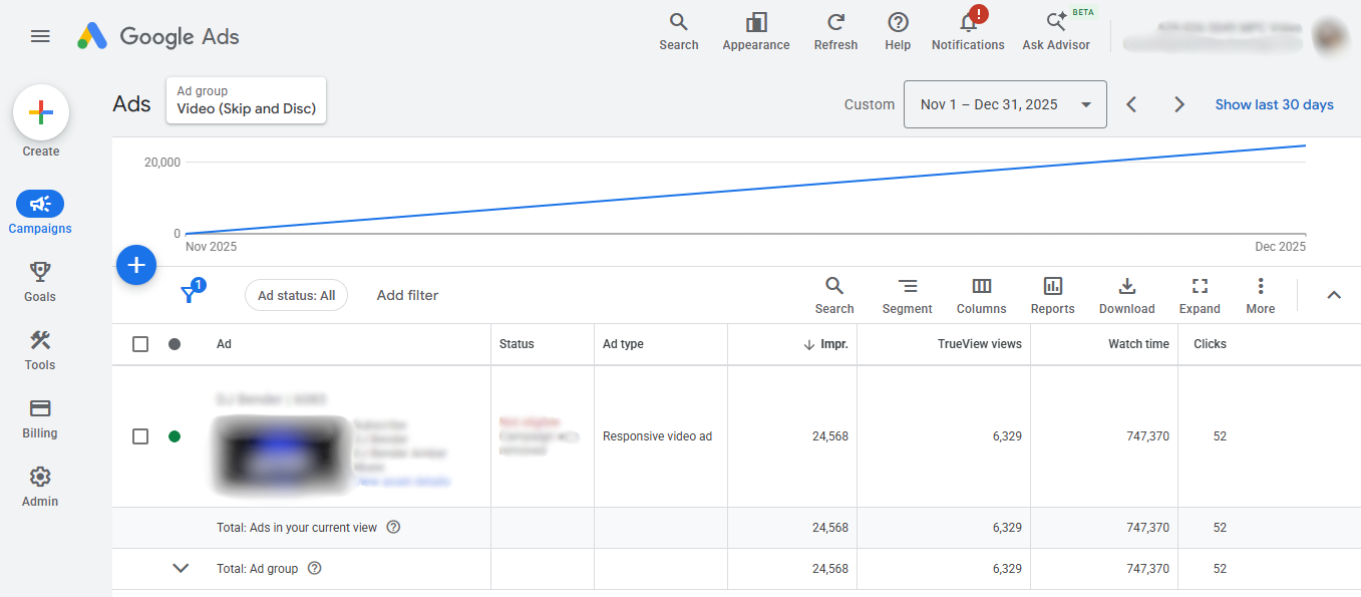
The campaign ran from November through December 2025 using a skip and discovery format — the same dual-format approach used in Case Study 3, combining pre-roll visibility with in-feed discovery placement. The campaign window of approximately two months reflects a longer sustained campaign strategy rather than a concentrated burst.
The targeting was built around DJ and electronic music interest segments. Google Ads campaign data confirms 24,568 impressions delivered, generating 6,329 TrueView views, 747,370 minutes of watch time, and 52 clicks across the November to December 2025 period.
The Results
The campaign delivered over 6,300 additional views, moving the video from 20,669 to 45,969 total views — more than doubling the view count. Subscriber count grew from 250 to 277. Likes increased from 350 to 1,100 — a growth of 750 likes, representing more than a tripling of the video’s like count.
The like count trajectory here is the most telling metric. A video moving from 350 to 1,100 likes during a campaign window where 6,300 views were added reflects a like rate of approximately 12 percent per promoted view — well above the platform average and a clear indicator of genuine audience resonance. DJ music content has a particularly engaged listener community, and when promotion reaches that community accurately, the response is both active and measurable.
What These Five Campaigns Have in Common
Looking across all five campaigns, several consistent patterns emerge that explain why each one produced results beyond a simple view count increase.
Audience Targeting Was Configured Before the Campaign Ran
In every case, the campaign was built around a specific music genre audience rather than a broad geographic or demographic target. Christian music audiences received the Christian artist’s content. Hip-hop listeners received the hip-hop artist’s content. Rock fans received the rock musician’s content. This is not an incidental detail — it is the mechanism that determines whether promoted views generate genuine engagement signals or passive view counts.
When a music video reaches a viewer who actively listens to that genre, the probability of a meaningful response — a like, a follow, a comment, a return visit — is fundamentally different from the probability generated by a viewer with no particular connection to the music. That difference in engagement probability is exactly what Google Ads’ interest targeting is designed to capture.
Watch Time Numbers Reflect Genuine Viewing
Across the five campaigns, total watch time generated ranged from 346,787 minutes (Rock artist) to 1,511,295 minutes (Pop artist over five days). These figures are not view counts — they are minutes of actual viewing. A view that lasts 30 seconds and a view that lasts four minutes contribute very differently to the algorithm’s model of a video’s quality.
The watch time totals documented here reflect viewers who chose to keep watching — which means they entered the algorithm’s positive signal category rather than the skip category. That is what produces downstream organic recommendations that continue after the paid campaign has ended.
Results Compounded Beyond the Paid Views
In every case, the total view count increase exceeded the TrueView views recorded in the Google Ads campaign data. This is the compounding effect that well-targeted paid promotion produces: the engagement signals from genuine interested viewers feed the algorithm’s recommendation system, which distributes the content to additional organic viewers who were not part of the paid campaign. The campaign generates the initial data. The algorithm responds to that data by extending reach.
What These Results Mean for Artists Considering Promotion
The five campaigns documented here span different genre categories, different starting positions, different budget scales, and different campaign durations. What they share is the outcome pattern: views from targeted, interested listeners generating real engagement that moves channels forward.
Paid promotion is not a substitute for strong content. A video that does not resonate with its target audience will not convert even well-targeted views into subscribers or engagement. What paid promotion does — when the audience targeting is accurate and the traffic source is Google Ads’ official infrastructure — is put genuinely good content in front of the listeners most likely to appreciate it.
For artists who want to understand exactly how the targeting configuration that produced these results works in practice, the full breakdown of how audience parameters are set and managed is covered in detail on the Vedzzy platform. Results like these are documented because they are independently verifiable — every campaign’s performance appears directly in the promoted channel’s YouTube Studio analytics under the YouTube advertising traffic source, with full watch time, geographic, and demographic data available for the creator to review.
The view counts in this case study are real. The subscriber numbers are real. The watch time is real. And the audience that generated all of it was real from the first impression.

Hi, I am Jason, a digital content strategist with 8 years of experience helping YouTube creators and brands grow their channels through data-driven content decisions. I have worked with creators across niches including tech, education, and lifestyle, and specialise in translating YouTube Analytics data into actionable growth strategies.
Categories: YouTube, YouTube Advertising