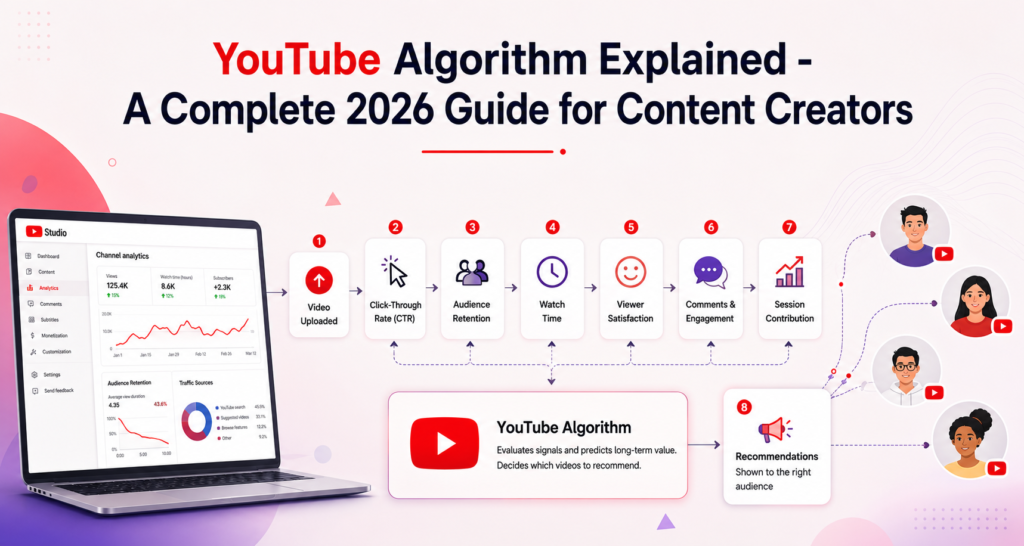
YouTube Algorithm Explained – A Complete 2026 Guide for Content Creators
Posted on July 26, 2026 by Jason Caldwell
The YouTube algorithm decides all of it. It decides which videos get recommended. It decides which channels grow. It decides which creators stay stuck at the same view count for months. If you make videos in 2026, you need to know how it works. This is not optional. It is the base your whole plan sits on.
Here is the truth. Most creators think the algorithm is random. They post a video. They watch the view count for a few days. Then they think YouTube is skipping them, or punishing them. But the algorithm is not random. It follows clear rules. Learn those rules, and you can grow your channel on purpose. Not by luck. By giving the system what it rewards.
This guide covers how the algorithm works in 2026. It covers what changed in the newest updates. And it covers what you need to do to build a channel the algorithm wants to promote.
What Is the YouTube Algorithm
The YouTube algorithm is not one system. It is many systems, all running at once. Each one handles its own part of the platform. The homepage system picks what shows up on your feed. The search system picks which videos rank for a search term. The Suggested system picks what plays next after a video ends. The Shorts system works almost on its own.
Each system uses its own signals. But they all share one goal. Keep viewers on YouTube as long as possible. Do this by showing them videos they will enjoy.
This one goal explains most of the algorithm’s behavior. YouTube is not trying to reward good creators. It is not trying to punish new channels. It is trying to guess what a viewer wants to watch right now. When your video is a good match, the algorithm shows it to more people. When it is not, the algorithm holds it back.
How the YouTube Algorithm Changed in 2026
The 2026 updates are some of the biggest changes in years. If you still use plans from 2023 or 2024, some may no longer work well. Here is what changed.
Satisfaction Signals Now Matter More Than Watch Time Alone
This is the biggest change of 2026. For years, total watch time was the main ranking signal. The longer people watched, the more the algorithm pushed a video. That is still true. But it is not the whole story now.
YouTube weighs watch time against satisfaction. This includes surveys that ask if a video was worth the time. It includes whether viewers came back for more. It includes whether they kept watching YouTube after the video ended. Picture two viewers. Both watch for six minutes. One closes the app right after. The other watches two more videos. YouTube treats these two very differently now.
The lesson is simple. Retention still matters. But how a video ends matters just as much. A video with a clear payoff beats a video that drags on. This is true even when both have the same watch time.
Session Contribution Is Now a Named Ranking Factor
YouTube added a new signal in 2026. It is called session contribution. It measures one thing. Does your video lead to more watching on YouTube? Not just of your channel. Of anything. A viewer who watches your video and then stays on YouTube for another hour sends a strong signal. A viewer who watches and leaves does not.
This changes how you should build end screens. The old approach sent each viewer to your own next video. The better approach sends viewers to whatever video will keep them watching, even if it is not yours. YouTube counts this as a win. It rewards the video that caused it.
The Hype Feature Opened a New Path for Early Growth
YouTube launched Hype in 2026. It is for channels with 500 to 500,000 fans. Viewers can boost a video in its first seven days by sending it a Hype. This adds the video to a short leaderboard. It raises visibility.
This helps mid-size channels most. Before, these channels had little say in how a video did in its first week. Now, a creator with a loyal fan base can build early speed. This can push the algorithm to test the video with more viewers.
Shorts and Long-Form Are Now Fully Separate
Before 2026, Shorts and long-form videos were linked. A weak Short could hurt a channel’s long-form reach. That link is gone now. The two systems judge content on their own.
This makes it safer to test new ideas with Shorts. Creators can try new formats without risking their main channel. At the same time, Shorts now show up in normal search results. Not just the Shorts feed. This gives Shorts a new way to be found.
AI-Generated Content Now Needs a Disclosure Label
YouTube now asks creators to label content made or changed a lot by AI. This covers AI voices, AI visuals, and realistic AI copies of real people. The algorithm uses this label to route content safely.
Skip the label when it is required, and your video can be suppressed. It can be demonetized. It can be pulled from the partner program. If you use AI tools, like voice cloning or AI video, learn this rule first.
The Core Signals the Algorithm Measures
Know the signals the algorithm tracks, and you can improve on purpose. No more guessing.
Click-Through Rate
Click-through rate, or CTR, measures one thing. How often do people click your video after seeing the thumbnail? Say YouTube shows your thumbnail to 1,000 people. 47 of them click it. Your CTR is 4.7 percent. This tells YouTube if your title and thumbnail create enough interest.
A CTR above 4 percent is healthy for most niches. Above 6 percent is strong. Below 2 percent means something is off. Maybe the thumbnail is weak. Maybe the title does not match what viewers want. Maybe YouTube is testing it with the wrong crowd.
Here is the key point about CTR. A high CTR with weak retention sends a mixed signal. People clicked, but left fast. YouTube reads this as a broken promise. The title and thumbnail said one thing. The video did not deliver. This can hurt your reach, even if your CTR looked great at first.
Viewer Retention
Viewer retention is the percent of your video that people watch. YouTube Studio shows this as a curve. It shows where viewers stopped watching. It shows where they rewatched. It shows where they skipped ahead.
A sharp drop in the first 30 seconds means a weak hook. The start did not give viewers a reason to stay. A drop at one spot in the middle means that section lost them. Maybe it was too long. Maybe too slow. Maybe off-topic from the title.
Retention above 50 percent is typical for solid content. But the shape of the curve matters more than the number. A curve that stays flat and then drops at the natural end is strong. A curve that falls slowly from the start is weak. This is true even if both end at the same number.
Engagement Signals
Likes, comments, shares, and saves tell the algorithm one thing. Viewers reacted. They did not just watch. In 2026, YouTube gave comments extra weight. Comments show real conversation. YouTube treats this as more valuable than passive viewing.
Rewatches matter more now too. A viewer who replays part of your video shows deep interest. YouTube reads this differently than a single watch-through.
YouTube also added “not interested” and dislike buttons to Shorts in January 2026. This gives viewers a direct way to say a video missed the mark. These bad signals shape your reach just as much as good ones. A video with lots of bad feedback gets less reach. Even with strong good numbers.
Session Contribution
Session contribution measures whether your video keeps people on YouTube longer. YouTube tracks this for single videos. It tracks this for whole channels over time. Channels that keep leading to longer sessions get better reach over time. YouTube builds a model of your channel. It sees your channel as one that satisfies viewers. Then it acts on that model going forward.
How the Algorithm Works Across Other Surfaces
The Home Feed Algorithm
The homepage is where most viewers start. It is deeply personal. It looks at your watch history. It looks at the time of day. It looks at your device. It looks at what you engaged with recently. No two people see the same homepage.
You cannot aim your video at one person’s homepage. What you can do is build strong engagement with your current viewers. This gives the algorithm trust. It learns your content fits a certain type of viewer. Then it tests your video with more people like them.
Channels with high engagement get stronger home feed reach. This beats channels whose numbers are watered down by inactive fans. This is why 5,000 engaged fans often beat 50,000 disengaged ones on the home feed.
The Search Algorithm
YouTube’s search looks at how well your video matches a search. It reads your title, description, spoken words, captions, and chapter labels. YouTube understands language much better now. It reads intent and context now. Not just keywords.
This means clear titles that speak to a real problem beat titles stuffed with keywords. Take a title like “Why your YouTube Shorts keep getting zero views.” It speaks to one clear problem. The algorithm matches this to searches about that same problem. Even if the exact words differ.
Search is the most stable traffic source most channels have. A video that ranks well keeps getting views for months, or years. This happens even without help from the recommendation system. Build some of your content around clear, searchable topics. This is the surest way to get steady long-term traffic.
The Suggested Videos Algorithm
Suggested videos show up beside a video, or after it ends. Most channels get most of their views here. This system matches viewers to videos. It looks at what they just watched. It looks at their wider history. It looks at what has worked with matching viewers.
To get picked up here, your content needs to perform well with people who watch matching videos. This is why staying in one clear niche matters so much. A channel that sticks to one type of content builds a clear viewer profile. The Suggested system can then act on that profile with more trust.
The Shorts Algorithm
The Shorts algorithm does not use the same signals as long-form. The main one is swipe-through rate. Do viewers keep watching, or swipe past? Completion rate matters a lot too. So does how fast a viewer finishes or abandons a Short.
Comments, shares, and likes matter on Shorts too. But bad signals carry more weight here. Things like swiping away or hitting “not interested.” The Shorts feed moves fast. Viewer patience is low.
Since the January 2026 update, Shorts show up in normal search results too. This is a new way for Shorts to get found. It works separate from the swipe feed. It helps creators whose fans use desktop or search more than the mobile Shorts feed.
Plans for Working With the Algorithm in 2026
Build Your Hook Around a Specific Viewer Situation
The best hooks in 2026 skip vague hype lines. Lines like “This video will change how you think about YouTube” do not work well anymore. The best hooks speak to the exact situation a viewer is in right now. Try this instead: “If your views dropped after the last YouTube update, here is why.” This speaks to something real. A viewer with that problem sees themselves in it right away.
A specific hook helps both the viewer and the algorithm. The viewer knows the video is for them. The algorithm gets a clear signal too. It learns exactly who this video is for. Why? Because the right viewers are the ones who click.
Keep your hook under 30 seconds. State your point clearly. Then deliver on it. Skip the extra setup.
Design Content in Sequences, Not Just Single Videos
Session contribution rewards channels that keep viewers watching across many videos. The easiest way to build this is to plan content that connects.
Before you publish, know what your next video will be. Set your end screen to point to the best next step. Picture a viewer who watches three connected videos in one sitting. Now picture three separate viewers who each watch one video and leave. The first sends a much stronger signal.
Series formats get real support from the algorithm. YouTube’s system spots a series. It routes viewers through it. This makes episodes easier to grow than one-off videos. Even when both are just as good.
Use Shorts as a Viewer Testing Tool
Shorts and long-form are now fully separate. So the best use of Shorts is not just growth. It is a cheap way to test ideas, hooks, and formats. Test them in Shorts first. Then build the best ones into long-form videos.
Say a hook gets strong engagement in a 45-second Short. That hook is worth turning into a 12-minute video. Say a Short flops instead. That tells you something key before you spend real time on the idea.
Shorts can also drive traffic to your longer videos. Make a Short that shares one useful tip. Point viewers to the full video for more. This works as a discovery tool. It adds to your reach without paid ads.
Optimize Your Metadata for Intent, Not Just Keywords
In 2026, your titles and descriptions should match viewer intent. Do not just stuff in keywords. YouTube knows meaning well now. A video titled “how to fix low views on YouTube Shorts” will match searches about that problem. Even without those exact words.
Write your title for the one viewer who needs this video. Write your description to confirm the video delivers what the title promised. Put your most key point in the first 150 characters. That is what shows in search results before the “Show more” cutoff.
Chapter timestamps matter more now too. YouTube indexes each chapter title on its own. One video can show up in search results for several queries this way. Chapters also help viewers jump straight to what they need. This improves how long they stay on that section.
Monitor the Right Metrics at the Right Frequency
Checking your view count each day wastes time. Daily changes are just noise. The signals that show real growth only show up over longer stretches of time.
Check CTR and retention for each video during its first week. This helps you catch problems early. Check your traffic sources weekly. This shows which parts of the algorithm drive your growth. Check your returning viewer rate and fan engagement monthly. This shows your overall channel health.
Pay close attention to your retention curve. Each big drop marks a moment where you lost viewers. That moment is your best clue for improvement. Watch the section that caused the drop. Ask yourself honestly: did it deliver what the title promised? Use that answer to make your next video stronger.
Understand That Promotion Feeds the Algorithm
Many creators miss one thing. Aimed outside ads help build early engagement signals. YouTube needs enough early data on a new video. Only then will it show that video to more viewers. Channels without a big fan base often struggle to build this data fast without paid help.
Picture a video that reaches real, eager viewers in its first week. Those viewers watch for a good stretch of time. They engage with the video too. This gives the algorithm the data it needs. It can then test the video with more viewers. Aimed paid ads through Google Ads reach real YouTube users. It targets by real interests and demographics. This builds this exact kind of strong early signal. These promoted views show up in YouTube Studio too. They come with full watch time and retention data. This adds real, useful information to the algorithm’s model of your video’s viewers.
Common Mistakes Creators Make With the YouTube Algorithm
Chasing views instead of the right viewers. Some creators build videos just to get the most clicks. They use clickbait. They use misleading thumbnails. This often gets high CTR but weak retention. The algorithm spots this pattern fast. It cuts back your reach. Aim for the right viewer instead. This wins in the long run.
Posting on and off and expecting steady support. YouTube’s systems build a model of your channel over time. Random posting makes this harder. Viewers form habits too. Random posting breaks the routine that builds strong session signals.
Treating Shorts as a quick shortcut to growth. Shorts can bring in view counts fast. But Shorts views do not build the same watch time. They do not build the same channel loyalty either. This loyalty is what drives long-term growth on the long-form side. The creators who win with Shorts in 2026 use them to test and discover. Not to replace a real long-form plan.
Skipping bad feedback. The “not interested” and dislike signals go straight into the algorithm’s view of your content. A pattern of bad feedback holds back your reach. This happens even when your good numbers look fine. Check your full feedback data in YouTube Studio. Not just the good parts.
Changing plan before giving it enough time. The algorithm builds its view of a channel over dozens of videos. It takes months of data. Many creators switch plans after just five or six videos. That is before they have enough data to know if it worked. Give a plan enough time to build real signal. Then judge it.
Frequently Asked Questions
How does the YouTube algorithm decide which videos to recommend?
YouTube looks at many signals at once. This includes click-through rate, retention, session contribution, engagement, and satisfaction data from post-watch surveys. It builds a model of which viewers will enjoy a video. Then it tests that video with wider groups as good signals build up. The algorithm does not reward good content directly. It rewards behavior that shows viewers found a video truly satisfying.
Does posting more videos help with the YouTube algorithm?
Posting more often has a mild good effect. It gives the algorithm more data. It gives viewers more ways to find your channel. But posting a lot of weak videos creates weak signals. This can actually hurt your reach. One strong video a week beats three weak videos a week. Consistency matters more than volume.
How long does it take for the YouTube algorithm to pick up a new video?
The algorithm starts working right after you upload. The first 24 to 48 hours matter most. Engagement from your current fans builds the early signal. This signal decides if YouTube tests your video with more people. Most videos that will do well show clear growth within the first week. Videos that stay flat after two weeks usually need a change. Try a new thumbnail. Try a new title. Try some aimed ads.
Do tags still matter for the YouTube algorithm in 2026?
Tags matter less now as a direct ranking signal. YouTube can read a video’s content on its own. It reads the title, description, audio, and captions. It does not need tags to sort content anymore. Tags are still worth adding. This is true, especially for niche terms and common alternate phrasings. But they should not be your main SEO focus. Your title, spoken words, chapters, and description carry far more weight.
What is the biggest signal for the YouTube algorithm in 2026?
No single signal decides all of it on its own. But satisfaction signals have grown a lot in importance in 2026. This makes the experience after watching more key than ever. Picture a video that earns strong satisfaction. Viewers rate it well. They come back to the channel. They keep watching YouTube. This video will do better than one with matching retention but weaker satisfaction. Make a video that truly delivers on its title, each time. That is the surest way to build strong satisfaction over time.
How does the YouTube Shorts algorithm differ from the normal algorithm?
The Shorts algorithm works on its own now, as of 2026. It is separate from the long-form system. It looks at swipe-through rate, completion rate, engagement, and bad feedback more heavily than long-form does. Why? The Shorts feed moves fast. Viewers decide in a split second. The most key moment on a Short is the first one to two seconds. Everything after depends on passing that first test.
Can paid ads help with the YouTube algorithm?
Yes. Paid ads through Google Ads can build early engagement signals. The algorithm uses these signals to judge how good a video is. Views from real, aimed, eager viewers create real watch time. They create real retention data too, just like unpaid views do. This can give a new video the data it needs. It can then reach more viewers without paid help. This helps most for channels without a large fan base. The key is traffic quality: views from real, well-aimed viewers create useful data. Views from fake or poorly aimed sources create weak data. That weak data does not help your reach.
Why did my video suddenly stop getting views?
A sudden drop in views usually comes from one of a few things. Maybe the algorithm’s first test of the video did not get enough good signal. Maybe a competitor posted a stronger video on the same topic. That competitor now holds the viewers who were coming to you. Maybe a platform-wide update changed how certain signals are weighed. Or maybe interest in the topic simply peaked. In most cases, check the retention curve and satisfaction data for that video. This shows exactly where viewer interest dropped. That is your best clue for the next video.
Working With the Algorithm for Long-Term Growth
The YouTube algorithm is not working against you. It is not working for you either. It is neutral. It responds to signals. Signals like engagement, satisfaction, and session data. It sends videos to viewers based on those signals alone. It does not care if you are new or established. It does not care if you are well-funded or bootstrapped.
This makes the algorithm a level playing field. Old media never worked this way. Picture a channel with 500 fans. It builds strong engagement. It can outperform a channel with 500,000 fans who have gone quiet. That is a real opportunity. Not just a nice idea. This is true for creators who know what the system rewards.
Build videos that solve a real problem for a real viewer. Make your hook earn the first 30 seconds. Deliver on your title’s promise before the video ends. Use chapters to help viewers and the algorithm both know your content. Watch your retention and satisfaction data. Use it to make your next video sharper than the last.
The algorithm follows the data. Give it good data to work with.

Hi, I am Jason, a digital content strategist with 8 years of experience helping YouTube creators and brands grow their channels through data-driven content decisions. I have worked with creators across niches including tech, education, and lifestyle, and specialise in translating YouTube Analytics data into actionable growth strategies.
Categories: YouTube, YouTube Growth Tips