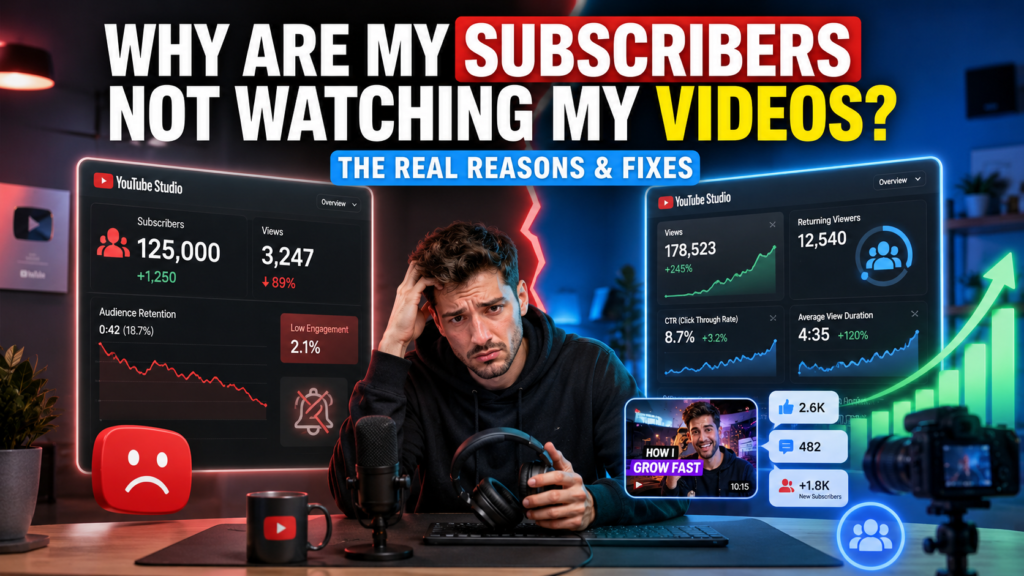
Why Your YouTube Subscribers Aren’t Watching Your Videos-13 Real Reasons & Fixes
Posted on May 27, 2026 by Jason Caldwell
You upload a new video. The thumbnail looks solid. The title feels right. You’ve spent hours editing.
Then you open YouTube Studio — and the view count barely moves.
If you have thousands of subscribers but your videos aren’t getting watched, you’re not alone. It’s one of the most common frustrations creators face, and it almost always has a fixable cause.
This guide covers the 13 most likely reasons your subscribers aren’t watching — and what to actually do about each one.
-
Most Subscribers Are No Longer Active Viewers
Subscriptions are often made once and forgotten.
A viewer might subscribe after watching one video they liked, then drift away. Their interests change. They discover other channels. They stop opening YouTube as often. None of that shows up in your subscriber count.
What to do: Stop measuring success by subscriber count. Instead, track returning viewers, average view duration, and watch time per video. These tell you who’s genuinely engaged — and that’s the audience worth building for.
-
Your Content Has Shifted Away From What People Subscribed For
This is the most common reason subscriber engagement drops.
When someone clicks subscribe, they’re making a bet: “I want more of this.” If your channel evolves into something different — different topics, different tone, different format — that bet no longer pays off for them.
What to do: Pull up your top 5 performing videos and identify the common thread. What problem were you solving? What topic brought the most loyal viewers? Build your upload schedule around that core theme, not around what seems interesting to you week to week.
-
Your Titles and Thumbnails Aren’t Earning the Click
Subscribers might see your video — they’re just choosing not to click it.
A weak title tells viewers nothing. A cluttered thumbnail blends into every other video on their feed.
Compare these:
- ❌ “New Music Marketing Tips”
- ✅ “Why Most Artists Waste Money Promoting Their Music (And What Actually Works)”
The second one creates a question. It implies a payoff. It gives someone a reason to stop scrolling.
What to do: Before publishing, ask yourself honestly: “If I saw this thumbnail on my feed, would I click it?” If the answer is “maybe,” keep working on it. Test one variable at a time — the image, the text overlay, or the title — so you learn what actually moves your click-through rate.
-
Your Video Takes Too Long to Deliver Value
Viewers decide in the first 15–30 seconds whether to keep watching.
If your intro is 45 seconds of greetings, channel plugs, or slow setup, many people will leave before you get to the point. When enough viewers do that, YouTube reads it as a signal that your video isn’t worth recommending — even to people who already subscribe to you.
What to do: Open with the value, not the preamble. Tell viewers immediately what they’ll learn and why it matters. You can introduce yourself after you’ve hooked them — not before.
-
You’re Uploading Too Infrequently
Out of sight, out of mind is real on YouTube.
If you disappear for two or three months, subscribers forget you exist. They fill that time with other creators who show up consistently. By the time you post again, your video is competing with content from channels they’ve been watching every week.
What to do: Pick a publishing cadence you can actually sustain — even once a month is better than inconsistent bursts. Consistency builds a habit in your audience. It also signals to YouTube’s algorithm that your channel is active and worth recommending.
-
Your Subscribers Came From Shorts — But You Post Long Videos
This is a growing issue.
YouTube Shorts can generate thousands of subscribers quickly, but those subscribers behave very differently from long-form viewers. Someone who liked a 30-second clip isn’t automatically ready to commit to a 20-minute video — even on the same topic.
What to do: Check your subscriber source data in YouTube Analytics. If Shorts are your primary driver, bridge the gap intentionally: mention your long-form content inside Shorts, make long videos that expand on popular Shorts topics, and use Shorts as previews rather than standalone content.
-
Your Videos Solve One-Time Problems
Some content is inherently one-and-done.
A viewer who searches “how to verify a YouTube channel” or “how to upload music to Spotify” watches your video, solves their problem, and never needs to return. That’s not a failure — it’s just how that type of content works.
What to do: Balance tutorial content with recurring content that gives viewers a reason to come back: strategy breakdowns, industry updates, creator case studies, common mistakes to avoid. These topics age better and build a returning audience.
-
You’re Not Creating a Content Journey
When every video stands alone, viewers watch one and leave. There’s no obvious next step.
The channels with the highest watch time tend to have videos that flow into each other — where watching one naturally leads you to want the next.
What to do: Build topic clusters. For example:
- Why YouTube Videos Don’t Get Recommended
- How to Fix Your Audience Retention
- Thumbnail Mistakes That Kill Clicks
- Why Your Channel Isn’t Growing (Despite Doing Everything Right)
Each video answers a related question, and each one leads naturally to the next. Use end screens and cards to connect them explicitly.
-
A Viral Video Brought in the Wrong Audience
Sometimes one video takes off — but it attracts viewers who have no interest in what you normally make.
A creator whose music tips channel goes viral with a video on “free audio plugins” will likely gain subscribers who want free software, not music promotion advice. When future videos arrive, that audience has no reason to watch.
What to do: Look at your highest-performing videos and ask: “What did this specific audience come for?” If the answer doesn’t match your channel direction, adjust your content toward what will serve the right audience — not toward whatever went viral.
-
You’re Tracking the Wrong Metrics
If you’re obsessed with subscriber count, you’re measuring the wrong thing.
YouTube increasingly weights channels based on returning viewers and watch time, not raw subscriber numbers. A channel with 500 loyal viewers who return every week is, in YouTube’s eyes, often healthier than a channel with 20,000 subscribers who barely watch.
What to do: Open YouTube Studio and look at your Returning viewers card under the Audience tab. Track it over time. If it’s flat or declining, your content isn’t giving people a reason to come back.
-
Notifications Don’t Reach Everyone — So Build Around What Does
A lot of creators assume YouTube notifies all subscribers every time they upload.
It doesn’t work that way. Many subscribers have notifications turned off entirely. Others see the notification and don’t act on it. YouTube also controls how and when your content is surfaced, based on each viewer’s behavior and history.
What to do: Don’t rely on notifications as your distribution strategy. Instead, build content that gets found through search, surfaces in recommendations, and earns enough early engagement that YouTube keeps showing it to new people. A strong title, a high click-through rate, and good retention will always outperform hoping the right people saw the bell icon.
-
You’re Building a Subscriber Count — Not a Community
Subscribers are numbers. Viewers are people.
The channels with the most loyal audiences are the ones where viewers feel a genuine connection — they know the creator’s voice, they trust the content, and they feel like they’re part of something.
What to do: Reply to comments, especially early ones. Ask specific questions in your videos. Run polls. Reference what your audience has said in previous videos. These signals tell viewers they’re noticed — and people return to places where they feel noticed.
-
You Haven’t Submitted the Post to Google Search Console
(For blog content like this one specifically)
A page can exist on a website without being indexed. If the URL hasn’t been submitted to Google Search Console, or if internal links don’t point to it, Google’s crawler may not have found it — or may have deprioritized it during a crawl.
What to do: Submit the URL directly in Google Search Console using the URL Inspection tool and request indexing. Add internal links to this article from other indexed pages on the site. Both steps tell Google this page exists and matters.
The Real Question to Ask Yourself
Instead of asking “Why aren’t my subscribers watching?” — ask a harder question:
“What would make someone genuinely want to come back and watch my next video?”
Subscriber engagement isn’t something you can force. But it naturally improves when you create content that delivers on expectations, opens fast, connects to other videos, and gives viewers a reason to return.
Fix the fundamentals, and the numbers follow.
FAQs
Why do I have thousands of subscribers but almost no views?
Most subscribers become inactive over time — they may have subscribed for a specific video, lost interest in the topic, or stopped using YouTube regularly. Focus on returning viewers and watch time rather than raw subscriber count.
Does YouTube notify all my subscribers when I upload?
No. Many subscribers have notifications disabled, and YouTube controls which content gets surfaced to each user based on their viewing behavior. Don’t rely on notifications as your primary distribution method.
Will changing my niche cause my subscribers to stop watching?
Usually yes. When content shifts significantly from what viewers originally subscribed for, engagement tends to drop. The further you move from your original focus, the more viewers you lose.
Are returning viewers more important than subscriber count?
For long-term channel health, yes. Returning viewers show genuine loyalty, generate more watch time, and send stronger signals to YouTube’s algorithm than inactive subscribers who never click.
Why don’t my Shorts subscribers watch my longer videos?
Short-form and long-form audiences have different viewing habits. Shorts viewers are used to quick content and don’t automatically transition to longer videos. Bridge this with content that connects the two formats directly.
What’s the single fastest fix for low subscriber engagement?
Improving your title and thumbnail usually has the fastest impact on click-through rate. After that, fixing your video hook (the first 30 seconds) is the next highest-leverage improvement.

Hi, I am Jason, a digital content strategist with 8 years of experience helping YouTube creators and brands grow their channels through data-driven content decisions. I have worked with creators across niches including tech, education, and lifestyle, and specialise in translating YouTube Analytics data into actionable growth strategies.
Categories: YouTube Growth Tips, YouTube Subscribers