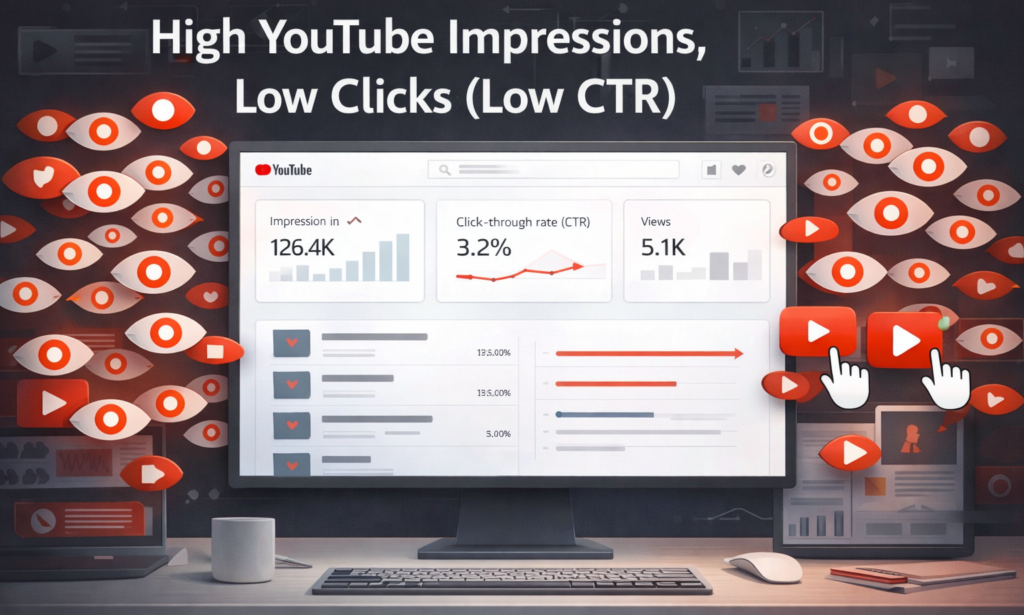
Why Your YouTube Impressions Are High but Clicks Are Low (CTR Fix Guide)
Posted on March 9, 2026 by James Martin
Many YouTube creators experience a confusing situation. Their videos are getting thousands of impressions, yet the views remain low. It feels like YouTube is showing the video to people, but nobody is clicking on it.
This problem usually comes down to one key metric: Click-Through Rate (CTR).
CTR measures how many viewers actually click your video after seeing it on the platform. Even if YouTube recommends your video widely, low CTR can stop it from growing.
The good news is that this problem is fixable. Once you understand why viewers are not clicking, you can adjust your titles, thumbnails, and positioning to improve results.
This guide explains what impressions really mean, why CTR drops, and the practical steps you can take to fix it.
What YouTube Impressions Actually Mean
An impression happens whenever YouTube shows your video thumbnail to a viewer. This usually occurs in places like the home feed, suggested videos, or search results.
For example, if YouTube shows your video to 10,000 people and 500 click it, your CTR is 5%.
Impressions alone are not a sign of success. They simply mean YouTube is testing your video with an audience to see how people react.
If viewers click, watch, and stay engaged, YouTube will show the video to more people. If they ignore it, distribution slows down.
Many creators misunderstand impressions and assume they should automatically turn into views. In reality, impressions are only the first step in YouTube’s testing process.
Why High Impressions but Low Clicks Happens
When impressions are high but clicks remain low, it usually means viewers are seeing the video but choosing something else.
This often happens for several reasons:
- The thumbnail does not stand out
- The title is unclear or boring
- The topic is too generic
- The title and thumbnail do not match viewer intent
- The video appears similar to many other videos
Imagine someone scrolling through YouTube and seeing ten similar videos. They will usually choose the one that looks the most interesting or promises the clearest value.
If your video looks average or confusing, viewers simply move on.
The goal is not just to appear in recommendations, but to give viewers a strong reason to click.
Thumbnail Psychology: Why People Click Certain Videos
Your thumbnail is often the first thing viewers notice. It works like a visual headline that quickly tells people what the video is about.
A strong thumbnail usually does three things:
- Communicates the topic instantly
- Creates curiosity
- Stands out visually from surrounding videos
For example, a thumbnail that clearly shows the result of a tutorial or a dramatic moment from a story can immediately attract attention.
On the other hand, thumbnails that are crowded with text, blurry images, or confusing visuals often get ignored.
Another common mistake is making thumbnails that look similar to every other video in the niche. When nothing visually stands out, viewers simply keep scrolling.
Clear images, strong contrast, and a single focused idea often perform much better than complex designs.
Title Mistakes That Reduce Click-Through Rate
Even with a good thumbnail, a weak title can prevent viewers from clicking.
Titles should help viewers quickly understand what they will gain from watching the video.
Some common title problems include:
Titles That Are Too Generic
Titles like “My New Video” or “YouTube Tips” do not tell viewers anything specific. People prefer clear promises such as learning a skill or solving a problem.
Titles That Are Too Long or Confusing
Long titles with multiple ideas make it difficult for viewers to understand the main message. Simpler titles are easier to scan while scrolling.
Titles That Do Not Match the Thumbnail
When the thumbnail suggests one idea and the title suggests another, viewers feel uncertain and often skip the video.
For example, if the thumbnail suggests a tutorial but the title sounds like a story, the viewer may hesitate.
Consistency between thumbnail and title builds trust and increases clicks.
Why Audience Intent Matters More Than Ever
Another reason CTR drops is misaligned viewer intent.
YouTube recommends videos to audiences based on behavior and interests. If your video is shown to viewers who are not interested in the topic, they will ignore it.
For example, a beginner tutorial might appear to advanced viewers who already know the information. In that case, the thumbnail and title may not appeal to them.
This does not necessarily mean the video is bad. It simply means the audience match is not ideal yet.
As YouTube continues testing the video with different viewers, CTR can improve if the right audience starts seeing it.
How to Improve Your Click-Through Rate Step by Step
Improving CTR usually involves small adjustments rather than drastic changes.
Improve Your Thumbnail Clarity
Use clear images, strong contrast, and a single visual focus. Avoid clutter and unnecessary elements that distract viewers from the main idea.
Write Titles That Highlight One Clear Benefit
Instead of vague titles, focus on the outcome the viewer will get from watching.
For example, explaining a specific solution or result often performs better than broad topics.
Study High-Performing Videos in Your Niche
Look at videos that already receive strong engagement. Notice how their thumbnails and titles communicate the value of the video quickly.
This does not mean copying them, but understanding what makes viewers curious.
Match the Thumbnail and Title
Think of the thumbnail and title as a team. Together they should create a complete story that encourages viewers to click.
Review Your Analytics
YouTube analytics can show which videos have low CTR and which ones attract clicks. Studying these patterns helps you understand what your audience responds to.
Sometimes small improvements in thumbnail design or title wording can significantly increase performance.
What Is a Good Click-Through Rate?
CTR varies depending on the type of video and where it appears on YouTube.
Generally, creators often see CTR ranges such as:
- 2–4%: needs improvement
- 4–8%: average performance
- 8–12%: strong performance
- 12% or higher: excellent
However, CTR alone does not determine success. YouTube also looks at watch time and audience retention to decide whether a video should continue being recommended.
The goal is not only to get clicks, but to ensure viewers stay and enjoy the content.
Final Thoughts
High impressions but low clicks usually indicate that YouTube is giving your video opportunities, but viewers are not convinced to watch.
This is not a failure. It simply means something about the presentation can be improved.
By focusing on clearer thumbnails, stronger titles, and better alignment with viewer intent, creators can significantly increase their click-through rate.
Small improvements in CTR often lead to large increases in views because more viewers choose to watch when your video appears.
Over time, learning how viewers react to your thumbnails and titles becomes one of the most valuable skills for growing on YouTube.
Frequently Asked Questions
Why are my YouTube impressions high but views low?
This usually happens when viewers see your video but do not click it. Weak thumbnails, unclear titles, or low curiosity can reduce clicks.
Does CTR affect YouTube recommendations?
Yes. Higher click-through rates show YouTube that viewers are interested in the video, which can lead to more recommendations.
What is a good CTR for YouTube videos?
Most creators see CTR between 4% and 10%. Videos with higher CTR often perform better in recommendations.
Should I change my thumbnail if CTR is low?
Yes. Updating thumbnails is a common strategy to improve CTR, especially if impressions are already high.
Can a video recover if CTR is low at first?
Yes. If the thumbnail or title improves, or if YouTube finds the right audience later, CTR and views can increase.
Categories: Uncategorized