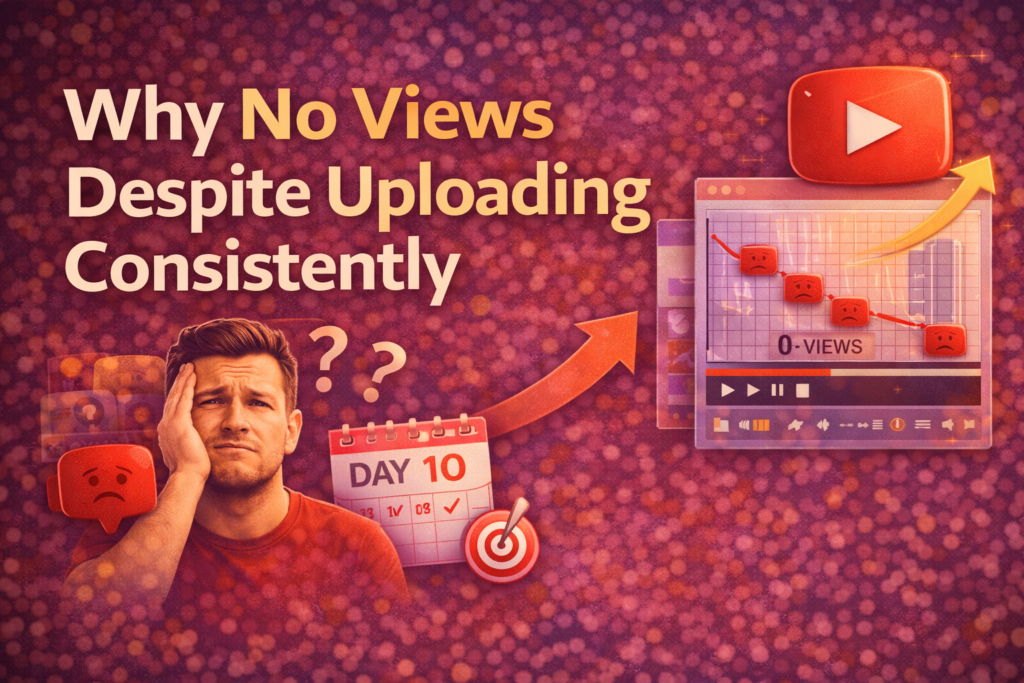
Why Your Video Isn’t Getting Views: 13 Common Mistakes Consistent Creators Make
Posted on January 12, 2026 by James Martin
Uploading consistently feels like doing everything right.
You follow a schedule.
You publish regularly.
You don’t miss uploads.
Yet the views don’t come.
This is one of the most frustrating experiences for creators, especially in 2025–2026. The truth is simple but uncomfortable: consistency alone does not guarantee growth on YouTube.
This article explains why your videos may not be getting views even though you upload regularly—and what actually moves the needle.
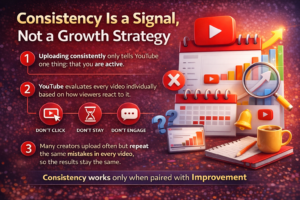
Consistency Is a Signal, Not a Growth Strategy
Uploading consistently only tells YouTube one thing: that you are active.
It does not automatically tell YouTube that your videos are worth pushing.
YouTube evaluates every video individually based on how viewers react to it. If viewers don’t click, don’t stay, or don’t engage, consistency won’t help.
Many creators upload often but repeat the same mistakes in every video, so the results stay the same.
Consistency works only when paired with improvement.

Your Videos May Not Be Getting Clicked
Before YouTube can judge your content, people have to click it.
If your impressions are high but views are low, the issue is usually the title or thumbnail.
Common problems include:
- Titles that are too generic
- Thumbnails that look crowded or unclear
- No emotional or curiosity trigger
- Titles that don’t match what viewers want
Viewers scroll fast. If they don’t instantly understand why they should click, they won’t.
Clear titles that promise one specific outcome usually perform better than clever or vague ones.

You Might Be Losing Viewers in the First 10 Seconds
Even if people click, YouTube watches what happens next.
If viewers leave quickly, the video stops getting recommended.
This often happens because:
- The intro is slow
- The video starts with greetings or branding
- The main point is delayed
- Viewers don’t know what they’ll gain
Viewers decide very fast whether a video is worth their time. When the opening seconds clearly state the problem and the solution, retention improves naturally.
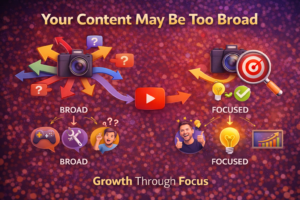
Your Content May Be Too Broad
Broad content struggles in 2026.
Trying to speak to everyone often means speaking clearly to no one.
If your channel covers too many topics or shifts direction often, YouTube has difficulty understanding who your audience is. Viewers feel the same confusion.
Narrow topics help both YouTube and viewers know exactly what to expect.
Channels that solve one specific problem for one specific audience usually grow faster, even with fewer uploads.

You’re Uploading, But Not Solving a Clear Problem
Many videos are informational but not useful.
They talk about a topic instead of solving something specific.
YouTube favors videos that:
- Answer a question
- Fix a problem
- Explain something clearly
- Help viewers make a decision
If your video does not give viewers a reason to stay until the end, they leave—even if the content is accurate.
Before uploading, it helps to ask: What problem does this video solve?

Your Videos May Not Match Viewer Intent
Sometimes content is good, but it’s shown to the wrong people.
This happens when:
- Titles don’t reflect what viewers are searching for
- Thumbnails suggest something different than the video delivers
- Keywords don’t match audience interest
When intent is mismatched, viewers click, get confused, and leave.
Clear alignment between title, thumbnail, and content helps YouTube recommend your video to the right audience over time.
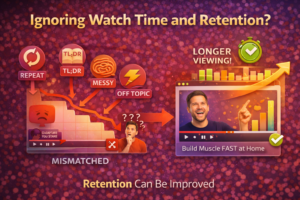
You Might Be Ignoring Watch Time and Retention
YouTube does not reward uploads.
It rewards viewer satisfaction.
If people don’t finish your videos or rewatch parts, the algorithm slows distribution.
Low views are often connected to low watch time rather than poor content. When viewers don’t stay long enough, YouTube limits distribution. Improving structure, pacing, and clarity can change this completely. This article on how to improve watch time with practical steps that actually work breaks down simple changes creators can make to keep viewers watching longer.
Common retention killers include:
- Repeating the same point
- Long explanations without visuals
- No structure or flow
- Sudden topic changes
Simple structure, visual examples, and smooth transitions keep viewers watching longer without feeling forced.

Your Channel May Lack a Clear Identity
Viewers subscribe when they understand what your channel is about.
If each video feels unrelated, viewers hesitate to subscribe because they don’t know what they’ll get next.
A clear channel identity helps:
- YouTube categorize your content
- Viewers recognize your value
- Subscribers return consistently
Consistency in topic matters more than consistency in upload timing.

You’re Uploading but Not Learning From Analytics
Many creators assume YouTube randomly decides which videos to push, but that’s not how it works. The platform constantly learns from viewer behavior, including watch time, drop-offs, and engagement patterns. If you want a deeper understanding of this process, this guide on how the YouTube algorithm learns from you and why that matters more than views explains why some videos grow slowly at first and then suddenly take off.
Analytics reveal:
- Where viewers leave
- Which videos attract clicks
- What topics retain attention
- Which formats work best
Ignoring analytics means repeating the same mistakes unknowingly.
Small changes based on retention graphs or click behavior can lead to noticeable improvements over time.

Your Videos May Be Competing in Overcrowded Topics
Some topics are extremely competitive.
If hundreds of similar videos already exist, YouTube chooses the ones with:
- Higher watch time
- Better retention
- Stronger engagement
- Clearer value
This doesn’t mean you should avoid competition entirely, but adding a specific angle or fresh perspective improves your chances.

You Might Be Uploading Without Promotion or Initial Signals
Organic reach is unpredictable, especially for small channels.
If no one watches your video early, YouTube has little data to work with.
Sharing videos with:
- Relevant communities
- Interested audiences
- Existing viewers
Helps generate initial signals that guide YouTube’s testing process.
Quality distribution matters more than wide distribution.
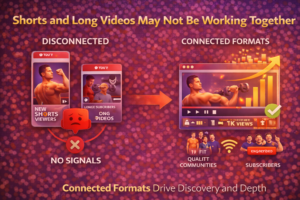
Shorts and Long Videos May Not Be Working Together
In 2026, formats work best together.
Creators who upload long videos without Shorts miss discovery.
Creators who upload only Shorts struggle to build depth.
When Shorts highlight moments from long videos, they help bring new viewers into deeper content.
Disconnected formats often lead to stalled growth.
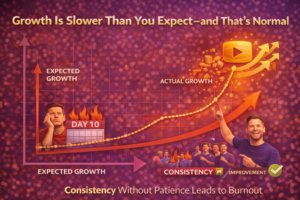
Growth Is Slower Than You Expect—and That’s Normal
Many creators underestimate how long growth takes.
YouTube growth is not linear. Some videos take weeks or months to gain traction.
Channels that focus on improvement instead of instant results often break through later, not sooner.
Consistency without patience leads to burnout.
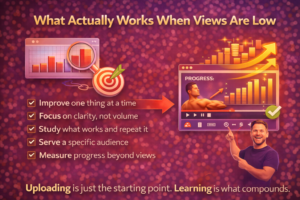
What Actually Works When Views Are Low
Creators who eventually grow usually:
- Improve one thing at a time
- Focus on clarity, not volume
- Study what works and repeat it
- Serve a specific audience
- Measure progress beyond views
Uploading is just the starting point. Learning is what compounds.
Final Thoughts
If your videos aren’t getting views despite consistent uploads, it doesn’t mean you’re failing.
It usually means something small but important needs adjustment.
YouTube rewards:
- Clear value
- Viewer satisfaction
- Focused topics
- Honest engagement
Fixing these areas turns consistency into growth.
Growth doesn’t come from uploading more.
It comes from uploading better, clearer, and more useful content—one video at a time.
Frequently Asked Questions
Why do my YouTube videos get no views at the beginning?
New videos often start with low views because YouTube tests them with a small audience first. If early viewers don’t click or stay long, distribution slows down until better signals appear.
Does uploading every day help get more views?
Uploading frequently helps only if video quality improves. Daily uploads with low click-through or retention usually don’t lead to growth. Fewer, better videos often perform better.
How long does it take for a YouTube video to get views?
Some videos get views within hours, while others take days or weeks. Search-based and evergreen videos often grow slowly but consistently over time.
Why do my impressions increase but views stay low?
This usually means people see your thumbnail but don’t click. Improving the title and thumbnail clarity often fixes this issue.
Can a video grow after weeks of low views?
Yes. Many videos pick up later when YouTube finds the right audience or when search demand increases. Early performance does not always decide long-term results.
Does YouTube stop promoting videos after 48 hours?
No. YouTube continues testing videos as long as they show positive viewer behavior. Videos can be recommended weeks or months after upload.
Why do some creators grow fast while others don’t?
Fast growth often comes from clear niche focus, strong viewer retention, and content that solves specific problems. Upload frequency alone does not create growth.
Do Shorts help if long videos are not getting views?
Shorts help with discovery, but they work best when connected to long videos. Shorts alone rarely build long-term view stability.
Is it bad to delete videos with low views?
Usually no. Low-performing videos don’t hurt your channel. It’s better to learn from them than remove them.
What should I fix first if my views are low?
Start with your titles and thumbnails, then improve the first 10 seconds of your videos. These two areas affect views more than anything else.
Categories: Uncategorized