Why Your YouTube Videos Rank in Search but Don’t Get Recommended
Posted on April 11, 2026 by Jason Caldwell
Getting your videos to rank in YouTube search is a great achievement.
It means your SEO is working.
Your titles, keywords, and topics are aligned with what people are searching for.
But many creators face a frustrating problem:
👉 Their videos get search views…
👉 But never appear in Suggested or Home feed
This leads to slow growth, limited reach, and difficulty scaling the channel.
The truth is simple:
Ranking in search and getting recommended are two completely different systems on YouTube.
This guide will explain why this happens and how you can fix it.
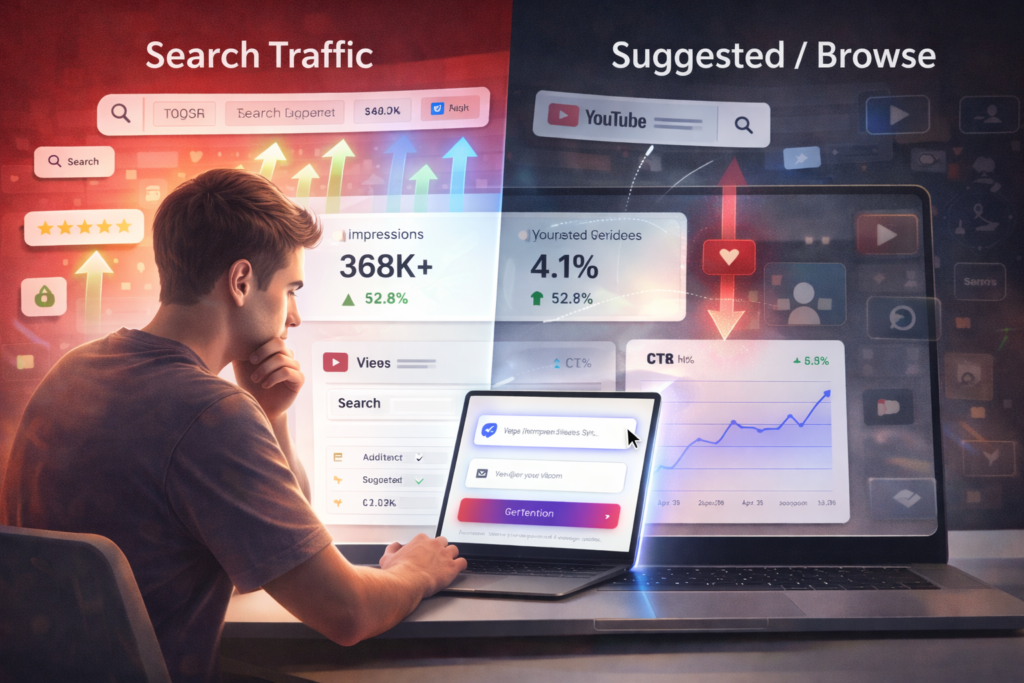
🎯 Search Traffic vs Suggested Traffic: What’s the Real Difference?
YouTube has two main ways your videos get views — and understanding this is very important if you want to grow faster.
Many creators focus only on search, but real growth usually comes from recommendations.
Let’s break this down clearly.
🔍 Search Traffic (Intent-Based Viewing)
Search traffic happens when a viewer actively goes to YouTube and types something specific.
For example:
- “how to grow on YouTube”
- “best mic for singing”
- “how to edit videos on phone”
In this case, the viewer already has a clear goal. They are looking for an answer, solution, or information.
YouTube’s job here is simple:
👉 Match the keyword with the most relevant videos
So if your video:
- has the right title
- uses the right keywords
- matches the topic clearly
It will appear in search results.
💡 What This Means
Search traffic is very targeted, but limited.
- Viewers come → get their answer → leave
- They may not watch more videos
- They may not subscribe
👉 Example:
Someone searches: “how to upload YouTube video”
They watch your video → learn it → leave
That’s useful… but not great for long-term growth.
🏠 Suggested & Browse Traffic (Discovery-Based Viewing)
Now let’s talk about where real growth happens.
Suggested and Browse traffic comes from:
- Home feed
- Suggested videos sidebar
- “Up next” recommendations
- YouTube app homepage
Here, viewers are not searching.
👉 They are just scrolling and discovering content
YouTube decides what to show based on:
- what the viewer watched before
- what they like
- what keeps them engaged
💡 What This Means
This is discovery-based traffic.
- Viewers didn’t plan to watch your video
- Your video “caught” their attention
- YouTube pushed it to them
👉 Example:
Someone is watching a music video
YouTube suggests your video next
They click → watch → then watch more
Now your video is part of a watching session
⚠️ The Real Difference (This Is the Key Insight)
Here’s the most important part:
👉 Search = keyword matching
👉 Suggested = performance trust
In Search:
YouTube asks:
“Does this video match the keyword?”
In Suggested:
YouTube asks:
“Do people enjoy this video enough to recommend it to others?”
That’s a huge difference.
🚨 Why Your Video Gets Stuck in Search
Many creators optimize only for search:
- strong keywords
- clear titles
- SEO-focused content
So their videos rank.
But they don’t focus on:
- retention
- engagement
- viewer satisfaction
So YouTube doesn’t trust the video enough to recommend it.
🧠 Simple Way to Understand
Think of it like this:
- Search traffic = people finding your video
- Suggested traffic = YouTube promoting your video
And YouTube only promotes videos that:
✔ keep viewers watching
✔ make viewers stay longer
✔ satisfy the audience
🎯 What You Should Do
If you want to move beyond search:
- Don’t just answer questions → make videos engaging
- Focus on retention, not just keywords
- Think: “Will people keep watching?”
- Make content that leads to more videos
👉 Because growth doesn’t come from being found
👉 It comes from being recommended
📉 Why Your Video Isn’t Getting Recommended
Let’s break down the real reasons.
- Low Audience Retention
YouTube’s biggest signal is simple:
👉 Do people keep watching your video?
If viewers click but leave quickly, YouTube assumes the content didn’t meet expectations. Even if your video ranks in search, low retention tells the algorithm it’s not engaging enough to recommend.
Example:
- Video length: 10 minutes
- Average watch time: 2 minutes
👉 That’s only 20% retention — very low
👉 Result: YouTube stops pushing the video further
What to do:
- Hook viewers in the first 5 seconds
- Avoid long intros or greetings
- Deliver value immediately
- Use faster pacing, cuts, and visuals
👉 Strong retention = higher chances of getting recommended
- Weak Session Time (Very Important in 2026)
YouTube doesn’t just evaluate your video — it evaluates what happens after your video ends.
👉 Does your content keep viewers on YouTube?
This is called session time, and it’s becoming more important in 2026.
Example:
- Viewer watches your video → leaves YouTube
👉 Negative signal
But if:
- Viewer watches your video → clicks another video
👉 Positive signal
What to do:
- Add end screens linking to related videos
- Suggest what to watch next during the video
- Create connected content (series or topics)
- Guide viewers naturally to another video
👉 The longer viewers stay on YouTube, the more your content gets promoted
- Your Content Solves Search — But Not Curiosity
Search-based content usually answers a question.
Example:
“How to upload a YouTube video”
Viewer watches → learns → leaves
👉 Problem: No reason to continue watching more content
Suggested content works differently. It relies on:
- curiosity
- emotion
- storytelling
What to do:
Don’t just give answers — make viewers want more.
- Add curiosity hooks
- Share surprising insights
- Build narrative or tension
👉 Example shift:
Instead of:
“How to grow on YouTube”
Try:
“Why most YouTube channels stop growing after 1000 subscribers”
👉 Curiosity keeps viewers engaged longer
- Your Videos Are Too “Keyword-Focused”
Many SEO-based videos feel:
- repetitive
- predictable
- similar to hundreds of other videos
YouTube compares your video with others on the same topic and promotes the one with better engagement.
👉 Being optimized is not enough — you must stand out
What to do:
- Add your personal experience
- Share real examples or results
- Use a unique angle or perspective
- Avoid generic, overused topics
👉 Make your video feel human, not just optimized
- Low Click-Through Rate (CTR) in Browse
Even if your video ranks in search, YouTube also tests it in the Home feed and Suggested section.
If people don’t click there:
👉 YouTube stops recommending it
Example:
- Search CTR = good
- Browse CTR = low
👉 Result: No growth beyond search traffic
What to do:
- Make thumbnails clear and bold
- Add curiosity or emotion
- Keep titles simple but compelling
- Focus on one strong idea per video
👉 Your video must compete visually with others on the platform
- No Clear Audience Signal
YouTube needs to understand:
👉 Who is your content for?
If your channel has:
- mixed topics
- inconsistent content
- no clear niche
YouTube struggles to recommend your videos to the right audience.
What to do:
- Focus on one niche or topic
- Repeat similar content types
- Build consistency in your uploads
- Target a specific audience group
👉 The clearer your audience, the better YouTube can promote your videos
🏆 Quick Summary
If your videos rank in search but don’t get recommended, the issue is usually not SEO — it’s viewer behavior signals:
- Retention
- Session time
- CTR
- Audience clarity
Fix these, and your videos can move from search traffic → real growth
🚀 How to Trigger Suggested & Browse Traffic
Here’s a simple strategy that actually works in 2026.
If your videos are stuck in search, these steps help you move into real growth.
Step 1: Keep SEO — But Don’t Rely Only on It
SEO helps your video get discovered through search.
But search alone won’t grow your channel fast.
👉 Search = starting point
👉 Recommendations = scaling point
Many creators focus only on keywords, but YouTube promotes videos based on performance, not just SEO.
👉 Use SEO to get in… but optimize for engagement to grow
Step 2: Improve Retention First
Retention is the main trigger for recommendations.
If viewers don’t stay, YouTube won’t push your video further.
Focus on:
- First 10 seconds (hook matters most)
- Pacing (avoid slow or repetitive parts)
- Structure (clear flow from start to end)
👉 Even small improvements in retention can unlock more reach
Step 3: Increase Session Time
YouTube wants viewers to stay on the platform longer.
So your goal is not just one video — but a chain of videos.
👉 One video → leads to another → leads to another
What to do:
- Recommend your next video inside the current video
- Use end screens effectively
- Create related content
👉 The longer viewers stay, the more YouTube promotes your content
Step 4: Make Titles More Curiosity-Based
Search titles explain.
Suggested titles attract.
Instead of only using:
❌ “How to…”
Also use:
✔ “Why…”
✔ “What happens if…”
✔ “Mistakes you should avoid…”
These titles create curiosity and make people want to click even when they are not searching.
👉 Curiosity = higher CTR in Browse and Suggested
Step 5: Build Content Clusters
Don’t upload random videos.
Create connected content topics so viewers naturally move from one video to another.
Example:
- Video 1 → Shorts growth
- Video 2 → retention
- Video 3 → CTR
All related and connected.
👉 This improves:
- session time
- viewer journey
- recommendation chances
🧠 Simple Way to Remember
👉 SEO brings people in
👉 Retention keeps them watching
👉 Session time grows your channel
🏆 Final Thoughts
Ranking in search is a great starting point.
But it’s only half of YouTube growth.
Real growth happens when:
👉 Your videos get recommended
👉 Your audience keeps watching
👉 Your content builds momentum
If your videos are stuck in search traffic, it doesn’t mean they are bad.
It simply means:
👉 You need to optimize for viewer behavior, not just keywords
Once you fix retention, session time, and content structure…
👉 YouTube starts pushing your videos beyond search
And that’s when real growth begins.
❓ FAQ
Why do my videos only get search views?
Because they are optimized for keywords but not for retention and engagement.
Can a search-based video go viral?
Yes, but only if it performs well in retention and viewer satisfaction.
What matters more: SEO or retention?
Retention matters more for recommendations.
How do I move from search to suggested traffic?
Improve watch time, session time, and make content more engaging.
Does niche matter for recommendations?
Yes. A clear niche helps YouTube understand your audience better.

Hi, I am Jason, a digital content strategist with 8 years of experience helping YouTube creators and brands grow their channels through data-driven content decisions. I have worked with creators across niches including tech, education, and lifestyle, and specialise in translating YouTube Analytics data into actionable growth strategies.
Categories: Uncategorized